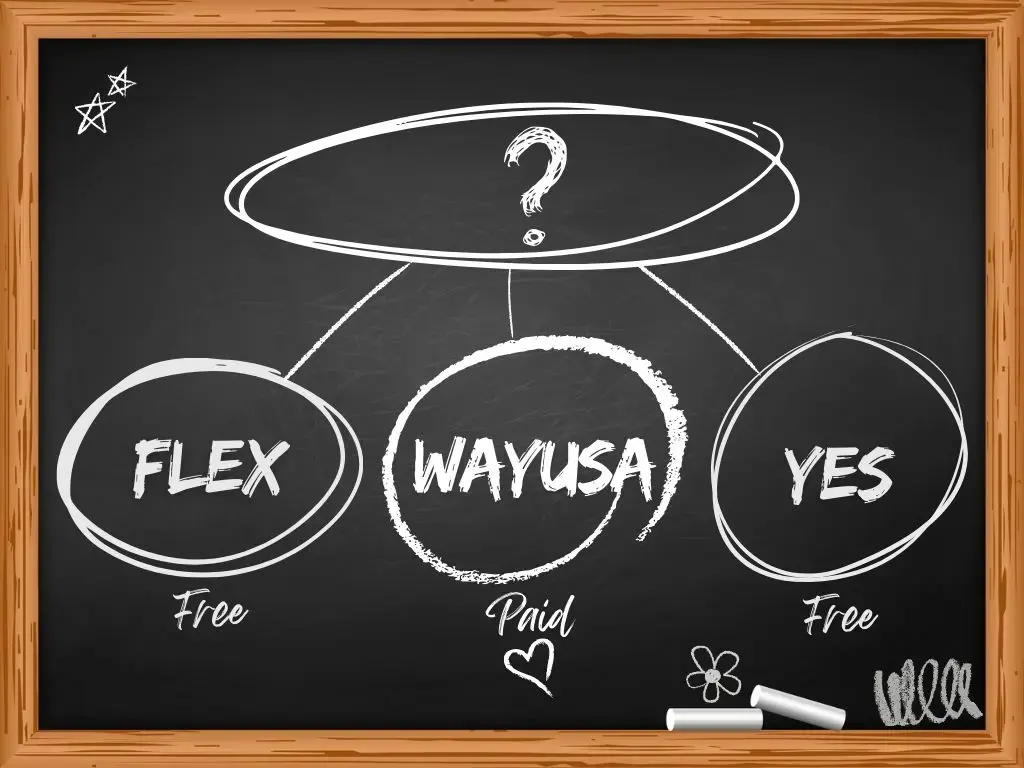
The J-1 high school exchange program in the United States is a unique chance to spend one academic year studying in an American school and living with a host family.
Many students and parents want to understand one important question:
What is the difference between free and paid exchange programs, and which option is right for us?
This article explains everything in clear and simple English.
What is the difference between free and paid exchange programs, and which option is right for us?
This article explains everything in clear and simple English.
One Program — Two Ways to Join
It is important to know that there is only one official high school exchange program in the United States:
The J-1 Secondary School Student Exchange Program, regulated by the U.S. Department of State.
All students, no matter how they enter the program, experience the same things in the USA:
- they live with an American host family,
- they study at a local high school,
- they follow the same rules,
- they receive support from local coordinators.
There are two ways:
- Free government programs (FLEX, YES, and CBYX)
- Paid participation through a sending organization
Free Exchange Programs: FLEX, YES, and CBYX
Many people think there are many free exchange programs, but this is not true.
There are only three official free programs, funded by the U.S. government.
There are only three official free programs, funded by the U.S. government.
FLEX — Future Leaders Exchange Program
Free program available in countries of Eastern Europe, the Caucasus, and Central Asia.
It works, for example, in Kazakhstan, Kyrgyzstan, Ukraine, Georgia, Armenia, and Moldova.
It works, for example, in Kazakhstan, Kyrgyzstan, Ukraine, Georgia, Armenia, and Moldova.
In most countries, no free competition is held at all. For example:
• the European Union
• the United Kingdom
• Canada
• Australia
• most countries in Asia and Latin America
• Israel
• Japan
• South Korea
• Russia
• Uzbekistan
• Turkey (partially — only YES occasionally)
• the Central African republics
Thus, for a significant part of the world, free programs do not exist at all.
• the European Union
• the United Kingdom
• Canada
• Australia
• most countries in Asia and Latin America
• Israel
• Japan
• South Korea
• Russia
• Uzbekistan
• Turkey (partially — only YES occasionally)
• the Central African republics
Thus, for a significant part of the world, free programs do not exist at all.
Students from these countries cannot apply for a free program because the competition does not exist there.
YES — Kennedy-Lugar Youth Exchange and Study Program
Free program for countries with a predominantly Muslim population.
CBYX — Congress-Bundestag Youth Exchange
A free exchange program between the USA and Germany.
Only German citizens can apply.
Only German citizens can apply.
These three programs are the complete list of free high school exchange programs.
Important things to know about free programs
Even when a free program exists in your country, there are two things to understand:
1. Very strong competition
Thousands of students apply.
Only a small percentage get selected.
Only a small percentage get selected.
2. Possible visa restriction (rule 212(e))
Students in free programs often receive a J-1 visa with a note:
“Subject to 212(e) — Two-Year Home Residency Requirement.”
This means the student must live in their home country for two years before they can:
- apply for an F-1 student visa (for private schools, colleges, universities),
- apply for work visas,
- apply for immigrant visas,
- change status inside the USA.
Paid J-1 Program: Same Exchange Experience, More Flexibility
If your country does not have a free program, or if the student does not pass the competitive selection, the exchange program is still available.
Paid participation allows the student to join the same J-1 State Department program, but:
- without competition,
- available for almost all countries,
- with clear timelines,
- and usually without the 212(e) visa restriction.
For families planning:
- future studies in a U.S. private school,
- admission to a U.S. college or university,
How the exchange system works: Sponsors and Sending Organizations
Both free and paid programs work the same way:
- The U.S. Department of State approves J-1 sponsors — American organizations that run the exchange program.
- Sponsors do not accept students directly.
- Students join the program through sending organizations in their home countries.
A sending organization:
- gives information to families,
- helps with documents,
- prepares the student,
- communicates with parents,
- stays in contact during the entire year in the USA,
- works together with the American sponsor.
WayUSA works as a sending organization for students who want to join the J-1 high school exchange program.
We help students and families:
- understand program options,
- decide which path is best (free or paid),
- complete the application process,
- prepare for interviews and documents,
- get ready for life with a host family,
- receive support during the whole year in the USA.
Conclusion:
- Free programs exist only in a small number of countries.
- They are highly competitive and may include visa restrictions.
- The paid J-1 program offers the same exchange experience with more flexibility.
- For many families, it is the most reliable and predictable way to study in the USA.
You can submit a short application now.
If it is pre-approved, you will be invited to meet with a program coordinator.
During the meeting you will:
- receive confirmation for participation in the next academic year,
- get answers to all your questions (school, family, visa, preparation, rules),
- understand which option — free or paid — is better for your family.